
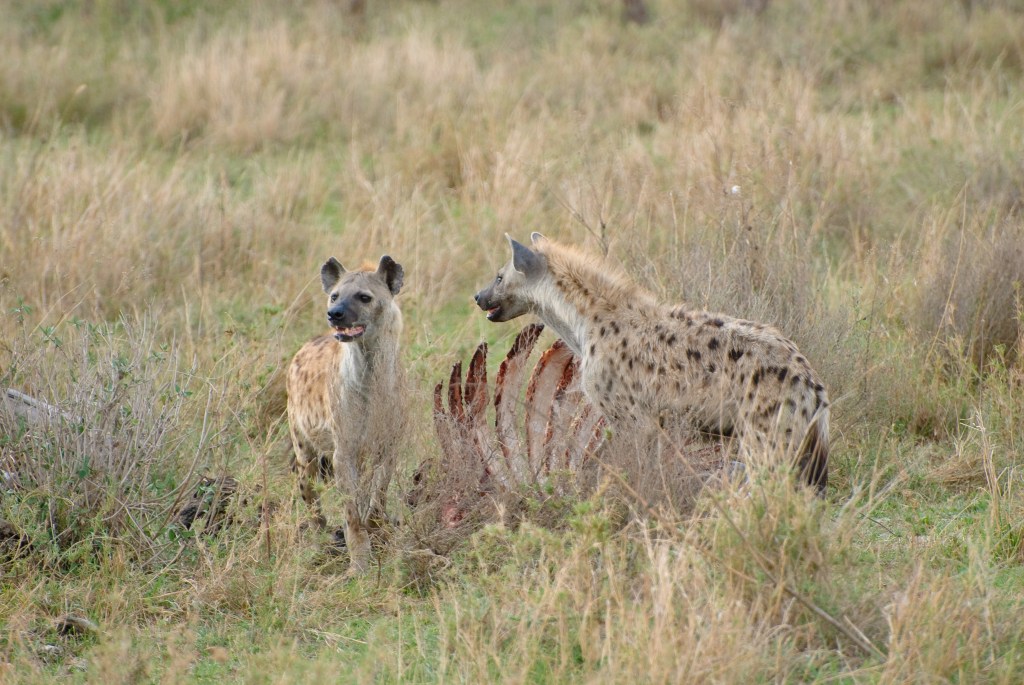
CQ Strategy is your ability to plan for, and be aware in, intercultural interactions. One of the goals of the CQ Safari Learning Journey is that we see how our work in CQ parallels natural processes. We want to pause the hectic pace of our lives to connect with the natural world and honor its lessons. Do animals other than humans strategize? It’s obvious that all animals demonstrate awareness of their surroundings, but how much can we say that they make and execute plans? Planning requires a level of intelligence and higher-order thinking skills that people are renowned for, but what about our animal neighbors? A plan is essentially a decision about future behavior. Fascinating research has shown that many types of animals are capable of planning and coming to a consensus in groups, regardless of our perception of their intelligence. Let’s look at some non-human animal strategizing we might witness on our CQ Safari Learning Journey.
Honeybees
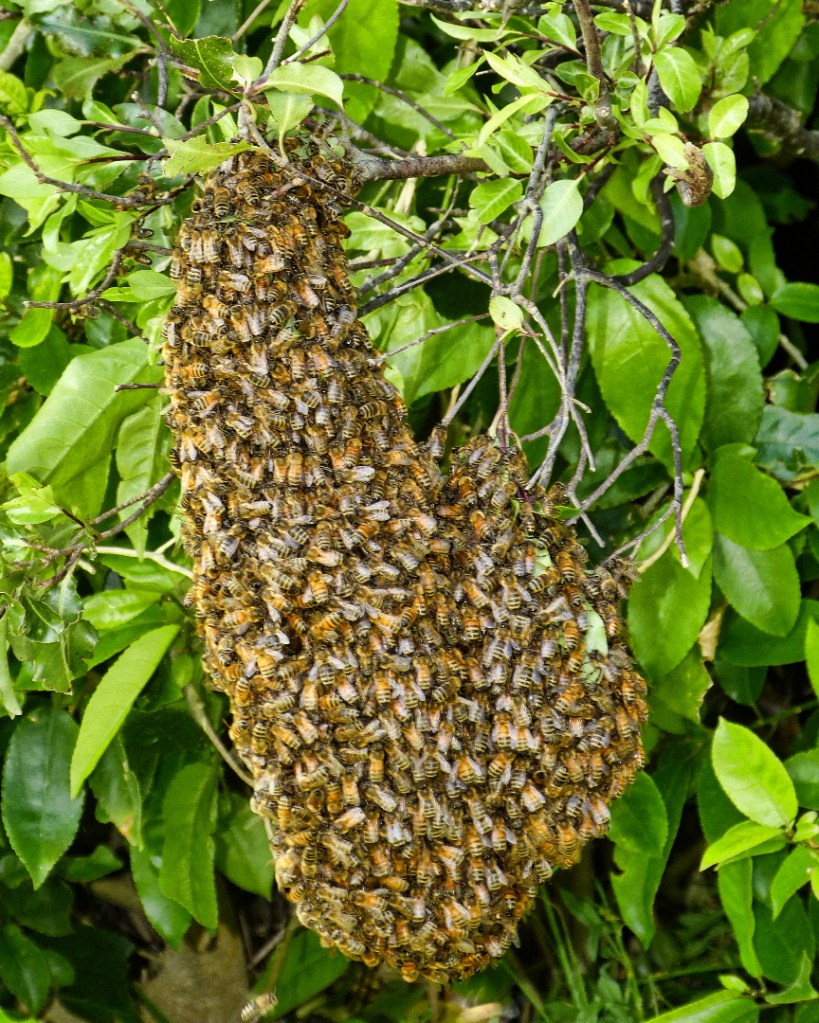
When a honeybee colony has become too large for the cavity in which it lives, it divides and some members relocate. But how do the bees decide where to go and when to move? The original queen leaves the nest cavity and stations herself nearby, usually on a tree branch.
She produces pheromones that attract about 75% of her workers to swarm around her. A small percentage of these workers serve as scouts, flying off in different directions to look for a suitable spot for a new home. When they’ve found one, the scouts return to the swarm and communicate its direction and quality using the same dances they employ to share information about food resources. Scouts typically check out the sites that are communicated with enthusiasm by their sisters and return with their own verdict; enthusiastic or not, depending on their interpretation of quality.
Over the course of several days, the scouts come to a consensus about the best site as dancing for inferior sites drops off. We still don’t understand all the details, but the swarm appears to lift off for their new home once the majority of scouts are dancing for the same site. The likelihood of seeing swarming bees in South Africa depends on the season in which you join us for the CQ Safari Learning Journey. Most swarms occur in spring and summer; in South Africa, this is September – January. Different honeybee species (genus Apis) are native to Asia, Africa, and Europe, but were introduced to the Americas hundreds of years ago. If you don’t witness South African honeybee swarms on our Journey, contact beekeepers near your home and ask to be informed of swarms to witness this spectacle in your spring and summer months.
African Lion
The African lion (Panthera leo) is the only species of feline that not only lives in stable social groups, but also hunts cooperatively. Cooperation requires planning and we’re still teasing out the details of how this works in species that hunt this way. In general, cooperative hunting is understudied, especially in animals like lions that mostly hunt at night. Lions might hunt alone, in pairs, or with a larger group. The largest hunting groups tend to form when lions choose large prey, such as water buffalo. Larger hunting groups are more successful at killing large prey than smaller groups and more successful at making kills in general.
However, we don’t know how lions decide the species to hunt or how individual lions choose whether or not to join a hunt. From multiple studies of lions in different regions, the common strategy is for a hunting group to surround prey and for each individual to assume a specific role. Some individuals crouch and wait to ambush the prey, while others work around it on the sides to drive it towards those lying in wait. In prides from one study, over the course of 400+ observed hunts, lionesses have preferences and the hunt is more successful when each lion fills its preferred role! One of the most interesting things we’re learning about all carnivores that hunt socially is that individuals can learn from each other and from other groups, and that each group can develop unique strategies for success.
Spotted Hyena
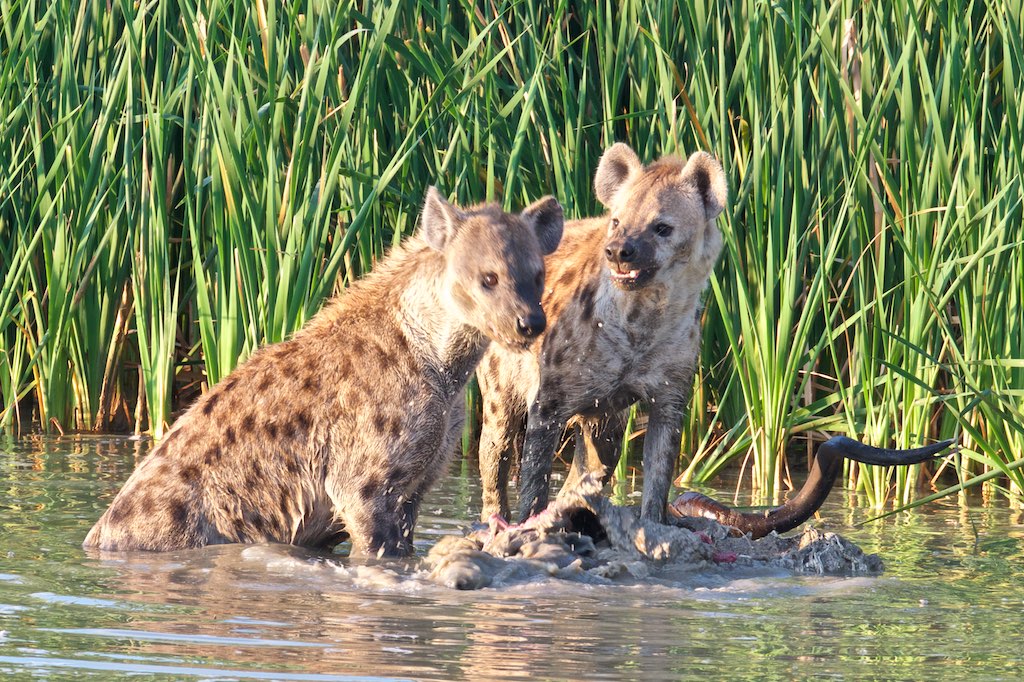
Hyenas are fascinating. The three living species occupy their own animal family (Hyaenidae), are evolutionarily most closely related to felines and mongooses…
… have social groups similar to primates in complexity, and their hunting strategies resemble those of canines. Clans are composed mostly of related females, their mates, and their immature offspring. A strict social hierarchy is maintained through elaborate behaviors, which requires strategizing alliances and maintaining bonds. As with lions, larger hunting groups tend to bring down larger prey more often and are more successful than smaller groups.
The hunting methods of spotted hyenas are less complicated than those of lions and are not considered “cooperation” by some sources. We don’t know how they decide when to start, but they first rush at a group of potential prey to scatter them, then stand aside and watch. We also don’t know which individual initiates the next step, but a chase begins for the selected prey and all hunting companions join in. The hyena strategy is to chase prey until it tires and can be attacked. Some studies have recorded hyenas chasing prey for up to 4 km (2.5 mi.) Each individual hyena appears to follow the general rule of “Move wherever you must during a chase to keep the selected prey animal between you and another hunter” (Holekamp et al. 2000). Also unlike in lions, there’s no evidence that individual hyenas have preferred hunting roles. Whether or not this is officially classified as cooperative, strategizing is evident because each individual must make a decision about where to position itself, relative to its hunting companions.
Summary
We’ve discovered in recent decades that many varied animal groups are capable of some level of strategizing – of making decisions about how to behave based on input from their surroundings. This is especially important in efforts to find homes, food, and mates… activities that are essential for survival. We focused here on social species, but solitary animals are also capable of strategy. Where do you find parallels between your strategy efforts and those of the animals we might see on our CQ Safari? Does your strategizing involve consensus, like with honeybees? Do you find yourself preferring specific roles and cooperation, like in a lion hunt? Are your efforts less coordinated and more like those of the hunting hyenas, keeping an eye on others and making adjustments to achieve a common goal? We’ll explore these and other parallels among human and non-human animal interactions on the CQ Safari Learning Journey.
References
- Bailey, Ida, Julia P. Myatt, and Alan M. Wilson. Group hunting within the Carnivora: physiological, cognitive, and environmental influences on strategy and cooperation. Behavioral Ecology and Sociobiology. 2013. 67:1-17.
- Conradt, Larissa, and Timothy J. Roper. Consensus decision making in animals. Trends in Ecology & Evolution. 2005. 20(8): 449-456
- Holekamp, K.E., L. Smale, R. Berg, and S.M. Cooper. Hunting rates and hunting success in the spotted hyena (Crocuta crocuta). Journal of Zoology, London. 1997. 242:1-15.
- Holekamp, K.E., E.E. Boydston, and L. Smale. Group travel in social carnivores. In. S. Boinski & P.A. Garber (Eds.), On the move: How and why animals travel in groups (pp. 587-627). 2000. University of Chicago Press.
- Holekamp, K.E., Sharleen T. Sakai, and Barbara L. Lundrigan. Social intelligence in the spotted hyena (Crocuta crocuta). Philosophical Transactions of the Royal Society B. 2007. 362:523-538.
- Seeley, T.D. Consensus building during nest-site selection in honey bee swarms: the expiration of dissent. Behavioral Ecology and Sociobiology. 2003. 53:417-424.
- Seeley, T.D. and S.C. Buhrman. Group decision making in swarms of honey bees. Behavioral Ecology and Sociobiology. 1999. 45:19-31.
- Smith, J.E., K.E. Holekamp. Hunting success in the spotted hyena: Morphological adaptations and behavioral strategies. In W. Srinivasan & B. Würsig (Eds.). Social strategies of carnivorous mammalian predators. 2023. Fascinating Life Sciences. Springer, Cham.
- Stander, P.E. Cooperative hunting in lions: the role of the individual. Behavioral Ecology and Sociobiology. 1992. 29:445-454.
- Trinkel, M. Prey selection and prey preferences of spotted hyenas Crocuta crocuta in the Etosha National Park, Namibia. Ecology Research. 2010. 25:413-417.
Featured image copyright oliver.dodd, CC BY 2.0
Hyena image copyright Brian Ralphs, CC BY 2.0
Honeybee swarm image copyright SidPix CC BY 2.0


Leave a Reply