
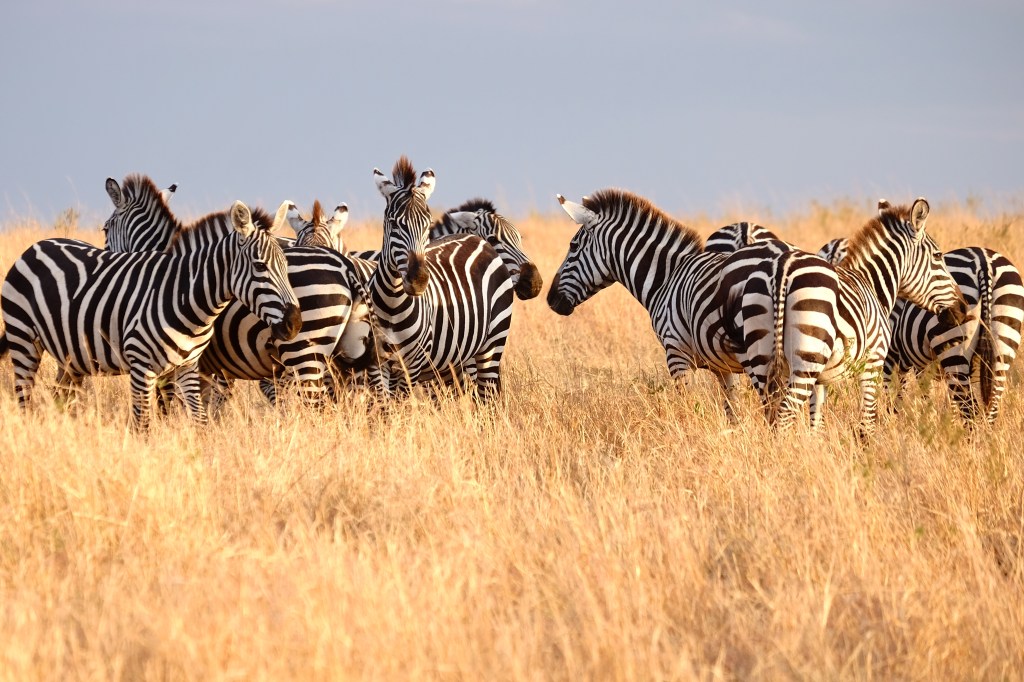
The Cultural Intelligence (CQ) Drive capability measures interest and persistence in multicultural interactions. It encompasses enjoyment in these experiences (intrinsic interest), obtaining benefits from them (extrinsic interest), and the confidence to be effective (self-efficacy). One of the goals of the new CQ Safari Learning Journey is that we see how our work in CQ parallels natural processes. We want to pause the hectic pace of our lives to connect with the natural world and honor its lessons. Our CQ Safari will take you to South Africa to observe lessons in Drive among some of the planet’s most iconic wildlife.
Enjoyment
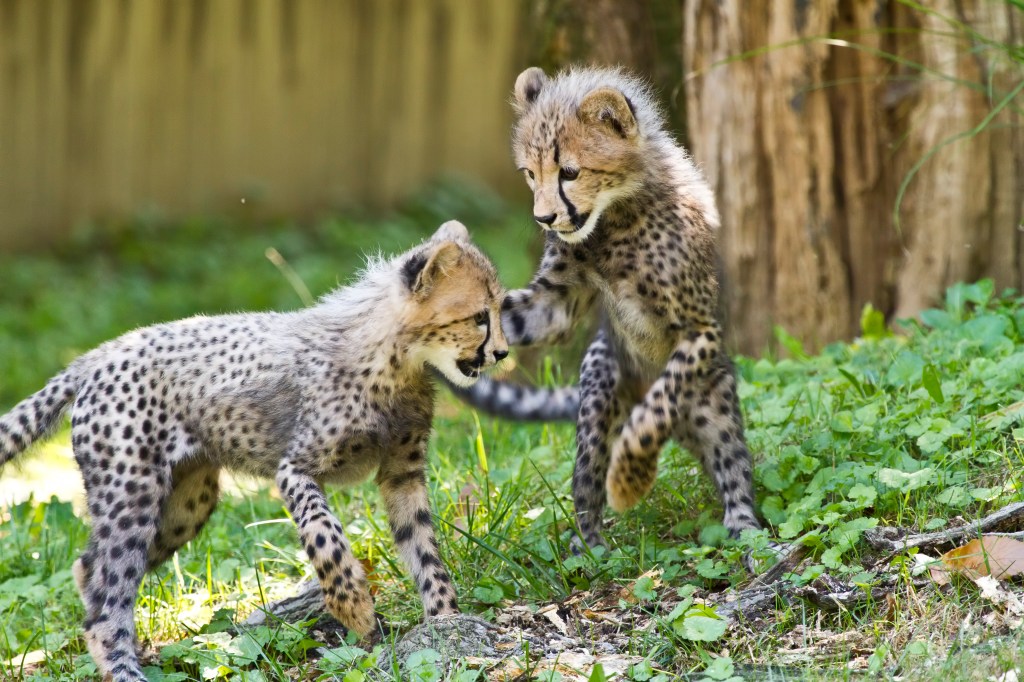
Most of us have seen baby animals at play. Kittens and puppies chase things, pounce on them, and growl in mock-battles with siblings. Wild animals do the same.
On the CQ Safari, we might witness cheetah cubs stalking their parents’ tails or wild dog pups yanking on each others’ ears. There might be springbok fawns bucking, charging, and chasing together. We recognize this play behavior among young animals as practice with important life skills.
But did you know that play can also be part of normal adult behavior? On our journey, we might catch a glimpse of a massive lion, his bushy mane full of leaves and dust, rolling around on the ground while he repeatedly tosses a dead rat into the air and catches it. Adult play has been documented in many species. Sometimes it preceeds eating, but not always. Sometimes, the play involves things that aren’t even edible. The lion might be tossing around a tuft of grass, instead of a rat. Researchers go to great lengths to avoid anthropomorphism, or attributing human characteristics to non-human animals. Still, science hasn’t found an explanation for adult play in our animal neighbors that is better supported than the notion that they do it for enjoyment.
Benefits
Extrinsic interest is obvious in the natural world. Herding animals, like zebra and wildebeest, benefit from the presence of many others looking for danger and ready to sound the alarm when it’s spotted. Hyaenas hunting in packs get to eat more because, as a group, they can kill larger prey. A leopard benefits from hauling his kill into the branches of an acacia and out of the reach of marauding lions. A puff adder warms herself on a rock and is able to search for a meal earlier on a cool morning as a result.
Confidence
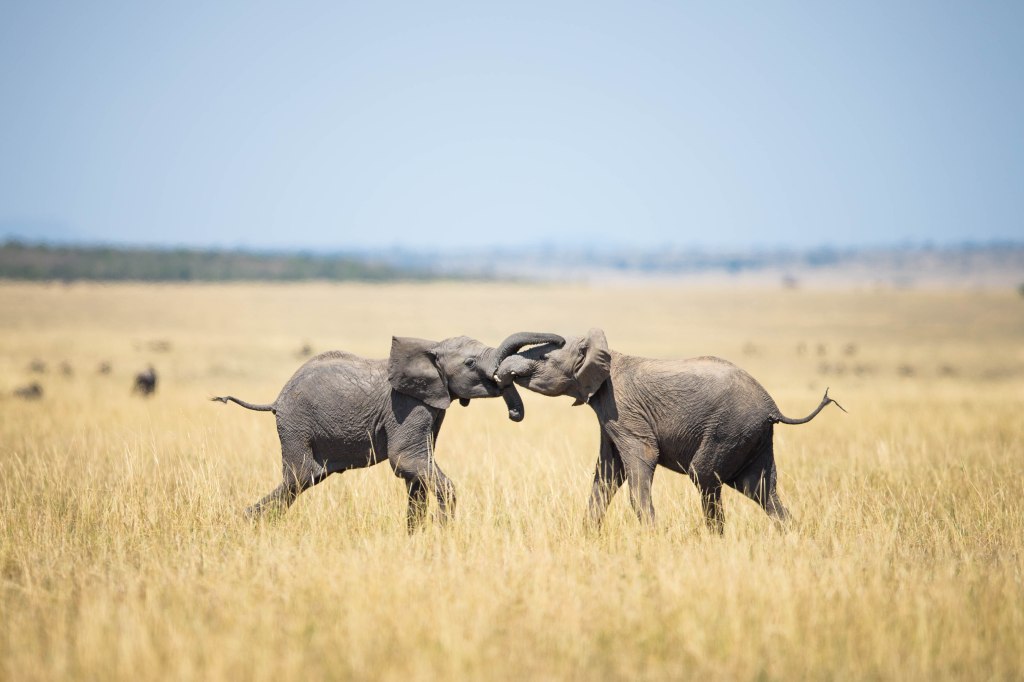
Confidence is achieved through learning and practice. Young male tsessebe learn to spar by watching adults and practicing locking horns with each other.
The elephant calves shown here are sparring together. Black eagle chicks learn to fly by watching their parents, then flapping about until their clumsy efforts become skillful. Cheetah cubs learn from their mothers and from trial and error which prey is worth the energy of a chase and which is not. All predators make more attempts at catching prey than actual kills, but practice increases their efficacy and efficiency.
Summary
In spite of our intelligence and technologies, we are fundamentally animals living in connection with a global network of other organisms and cycles. The CQ Safari Learning Journey will be a once-in-a-lifetime experience in which we explore parallels between nature and our work with Cultural Intelligence. We hope for you to rediscover wonder; to be awestruck; to be rendered speechless. We hope you will find your own connection to nature and reconnect with your reasons for working in the CQ arena in the first place. Our world is stunning in its diversity, beauty, and resilience. Our work in CQ is an act of love, for each other and for the planet we share.
Zebra herd image copyright Susan Jane Golding, CC BY 2.0
Cheetah cubs image copyright Ken_from_MD, CC BY-SA 2.0
Elephant calves sparring image copyright Make it Kenya PDM 1.0


Leave a Reply