
Download and use of images from this site is a violation of copyright law and legal action will be pursued, unless permission has been granted by the author.
This content is based on a post originally published on May 29, 2011, on my blog “Pollinators Info” (no longer online).
Carpenter bees themselves are rarely a problem because they aren’t aggressive. If you’re seeing large black-and-yellow bees buzzing around and coming in and out of holes in your wooden walls or furniture, they are most likely carpenter bees. The biggest problem is that these bees like to nest in soft wood, and females will keep using a good resource year after year. A decrease in natural nesting sites has increased the problem for homeowners.
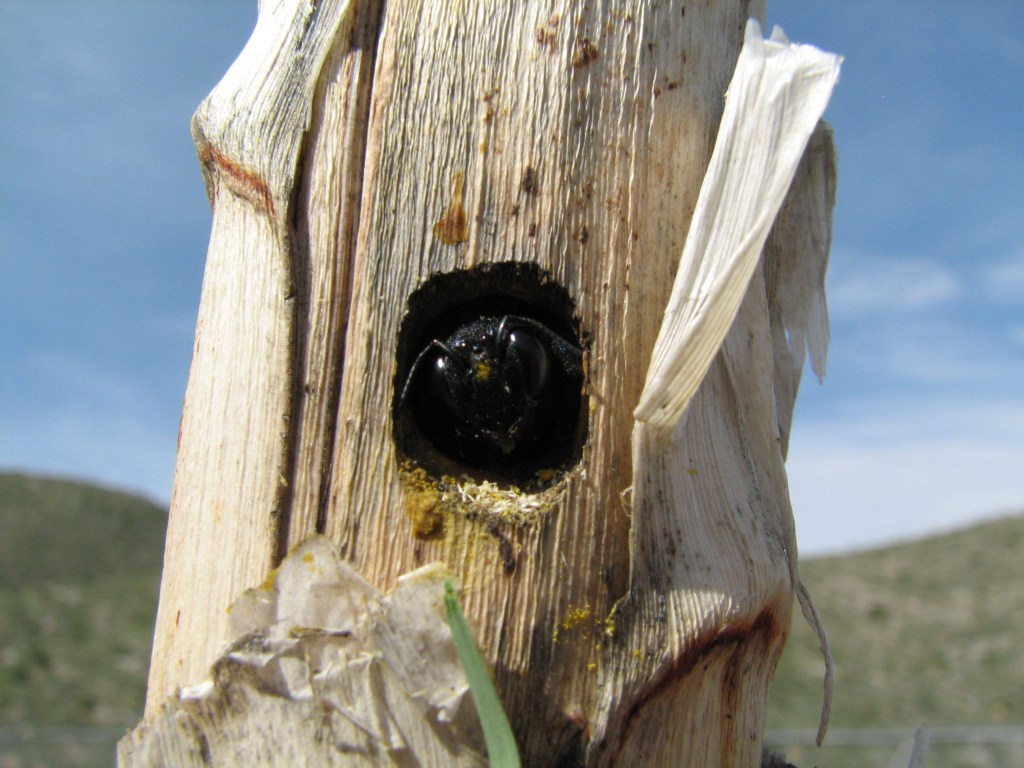
The bees have few places to nest in the “wild,” so they do the best they can with other wood sources. This photo shows a female carpenter bee nesting in a natural location: a sotol stem in Texas.
So, what to do?
Here are some options, with pros and cons included:
- You could leave them alone. They’re harmless to people and pets unless they’re physically squeezed, so you need not worry about being stung. However, the fact that they return over years to tunnel into wood could compromise the strength of your wall, porch, etc.
- You could try to kill them all. This eliminates individual bees and keeps them from returning. However, new bees can start nests year after year and you might find it a constant irritation trying to keep up with them. Also, pesticide application introduces toxins to your living environment, AND can kill non-target species. Ongoing research suggests that pollinators need all the help we can provide, and keeping your property free of pesticides is important for pollinator conservation.
- You could paint your wood. The bees don’t like to chew through paint, so this could drastically decrease or eliminate the number that try to nest in your structure. However, keeping the paint fresh every few years could be time- and money-consuming.
- You could add vinyl siding or other non-natural material. Bees can’t chew into these materials, so there shouldn’t be any nests after they are installed. On the other hand, vinyl is a plastic made from non-renewable fossil fuels and is difficult to reuse or recycle.
- You could try providing better nesting sites on your property to lure bees away from your home or furniture. Depending on your location, you could add native wood blocks, stems, or stalks to your yard that would be more attractive than your walls to nesting bees. These could be a source of engagement with nature for you and your family or community. This is my go-to suggestion because it adds habitat without harming anything with pesticides.
I’d love to know if any readers have had success with these methods! Please share your story with us!
Featured image copyright Helena Jacoba, 2013 CC BY 2.0
| Download and use of images from this site is a violation of copyright law and legal action will be pursued, unless permission has been granted by the author. All images are copyright Athena Rayne Anderson unless otherwise stated. |

 Athena Rayne Anderson
Leave a comment