Download and use of images from this site is a violation of copyright law and legal action will be pursued, unless permission has been granted by the author.
This content is based on a post originally published on May 13, 2011, on my blog “Pollinators Info” (no longer online).
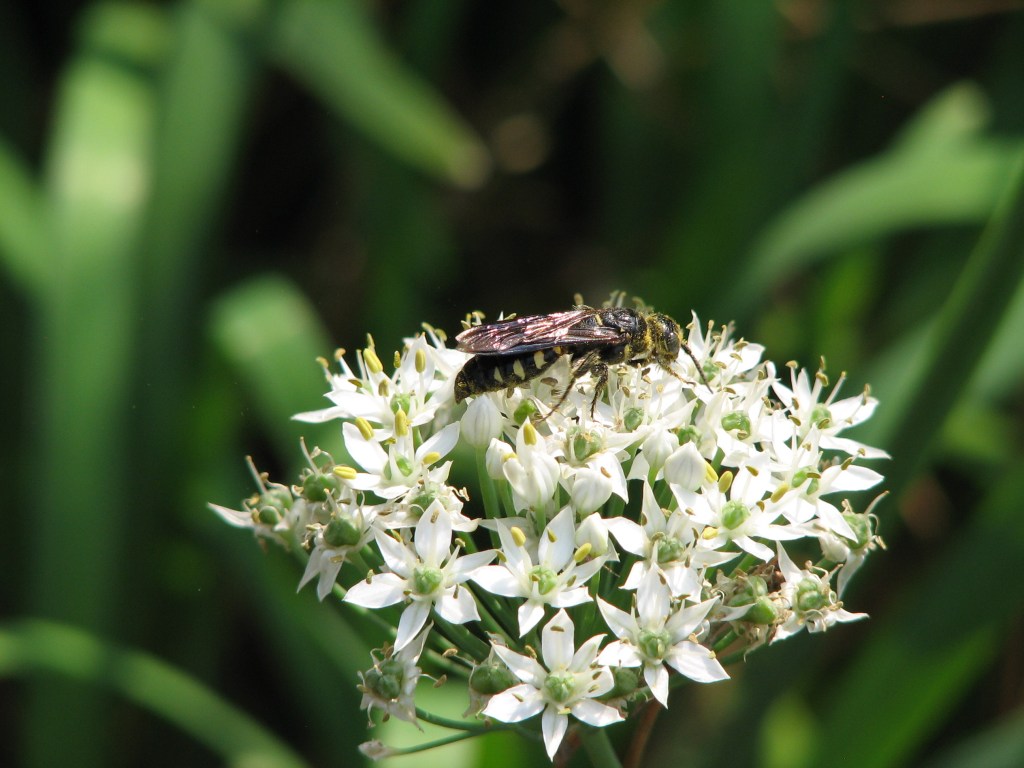
It can be challenging to distinguish between bees, wasps, and flies. Together, they will probably be your most common flower visitors, so learning to recognize them can be an interesting study. You might have to look closely until you’re used to telling them apart, but not to worry: most will be too busy eating to notice you. Just remember to be quiet and move slowly so as not to startle them.
Bees and wasps will usually be most difficult to tell apart, because they’re more closely related to each other (both in the Order Hymenoptera) than they are to flies (Order Diptera). Bees tend to look more fuzzy, and might be carrying pollen under their abdomens or on their legs. Wasps usually look sleek and shiny.
Wasps are more likely than bees to appear “nervous,” flicking their wings and poking under leaves and other stuff, as though they’re looking for something (they are – food). These are general guidelines; there are, of course, shiny bees and fuzzy wasps. Here’s a quick comparison between a bee and wasp you’ve probably seen around your yard if you live in the southeastern U.S.:
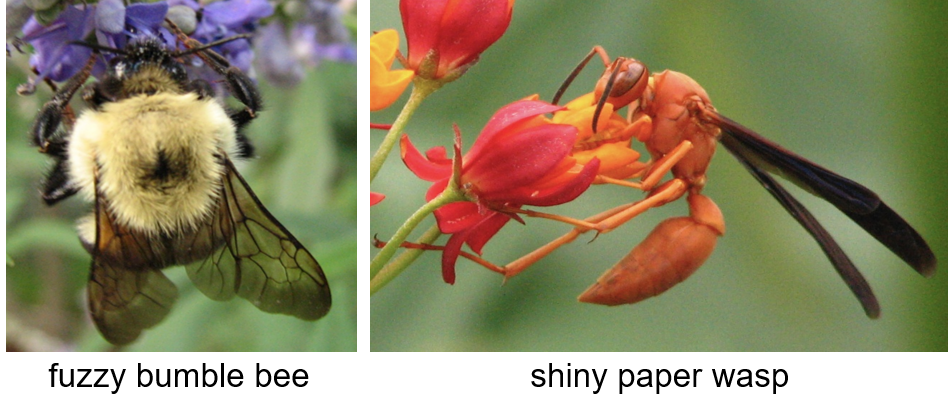
What about flies? Flies only have two wings, while bees and wasps have four. It’s not easy to see these differences and both bees and wasps hook their wings together, so it looks like they only have two.
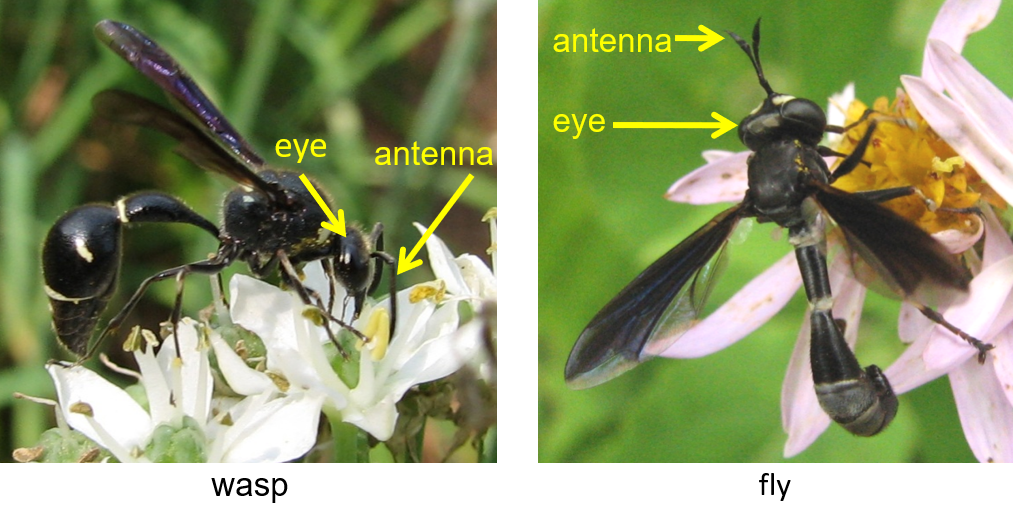
The way I distinguish flies from bees and wasps is to notice their antennae and eyes. Fly antennae are shorter and usually attached between the eyes, right in the middle of their heads. The antennae of bees and wasps are usually longer than those of flies, are attached to their heads slightly above dead center and between the eyes, and they also have a “joint” in them that makes them look L-shaped (elbowed). Also, fly eyes look more bulgy and take up more space on their heads than those of bees and wasps. Here’s an example of a wasp and a fly that look very similar with arrows showing the eyes and antennae:
| Download and use of images from this site is a violation of copyright law and legal action will be pursued, unless permission has been granted by the author. All images are copyright Athena Rayne Anderson unless otherwise stated. |

 Athena Rayne Anderson
Leave a comment