Download and use of images from this site is a violation of copyright law and legal action will be pursued, unless permission has been granted by the author.
This post is based on one that was originally published on May 15, 2011, on my blog “Pollinators Info” (no longer online).
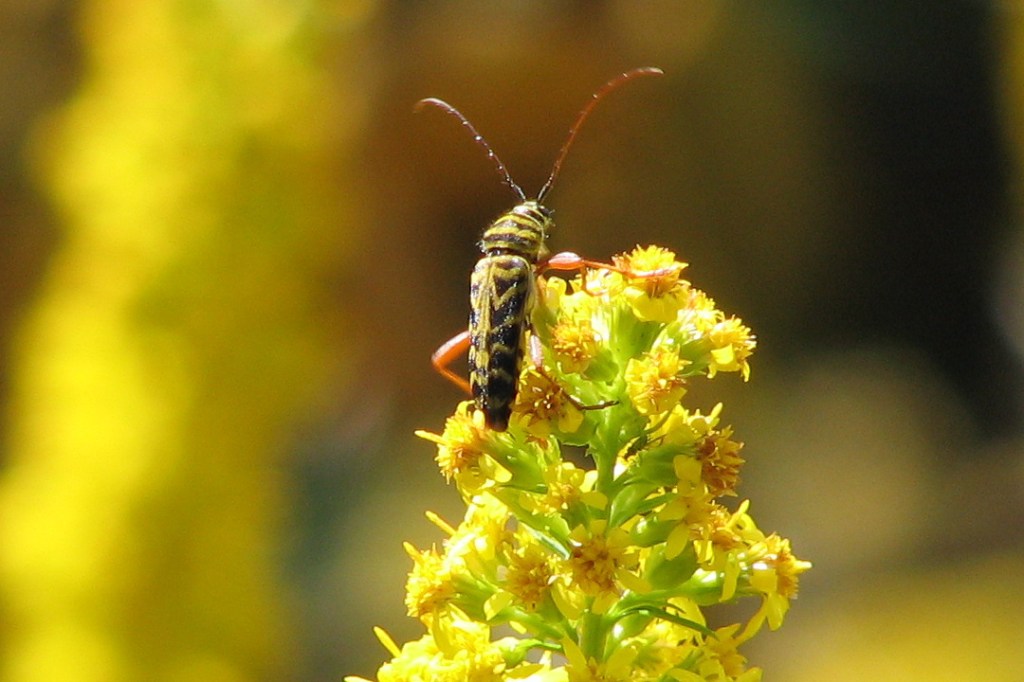
Beetle pollination is thought to have evolved with some of the first flowering plants. Beetles are messy, destructive pollinators, munching their way through all flower structures. They also defecate, mate, and lay eggs inside the flowers they visit.
How is this beneficial for the plant? As they perform all these activities, the beetles get dusted with pollen and carry it to other flowers. The beetle pollination syndrome is characterized by flowers with many anthers and stigmas as an adaptation that makes it likely that some pollen will reach some eggs, and result in some fruit. In spite of the destructive nature of this syndrome, it is considered more successful at facilitating pollination than wind or water, because the beetle serves as a transporter that carries pollen to receptive stigmas.
Ancient flowering plants (those that evolved early in evolutionary history), like those in the magnolia family, are commonly beetle-pollinated.
| Download and use of images from this site is a violation of copyright law and legal action will be pursued, unless permission has been granted by the author. All images are copyright Athena Rayne Anderson unless otherwise stated. |

 Athena Rayne Anderson
Leave a comment