
Download and use of images from this site is a violation of copyright law and legal action will be pursued, unless permission has been granted by the author.
This post is based on one that was originally published on May 18, 2011, on my blog “Pollinators Info” (no longer online).
The bee pollination syndrome includes flowers that are usually white, yellow, blue, and / or purple in color. Bees can’t see red, but that doesn’t mean they don’t visit red flowers. I shot the featured image in Costa Rica and it shows some little Trigona stingless honey-making bees visiting a red and yellow Heliconia flower.
As for flower shape, the bee pollination syndrome includes everything from keeled pea flowers they have to expend energy to get into, to the open flowers of the aster family. Some bee species have shape preferences or aversions. For instance, it’s rare to see European honeybees feeding from flowers that require forced entry to access nectar. Some examples include flowers in the pea family and many orchids. Bumble bees, on the other hand, are common pollinators of keeled flowers.
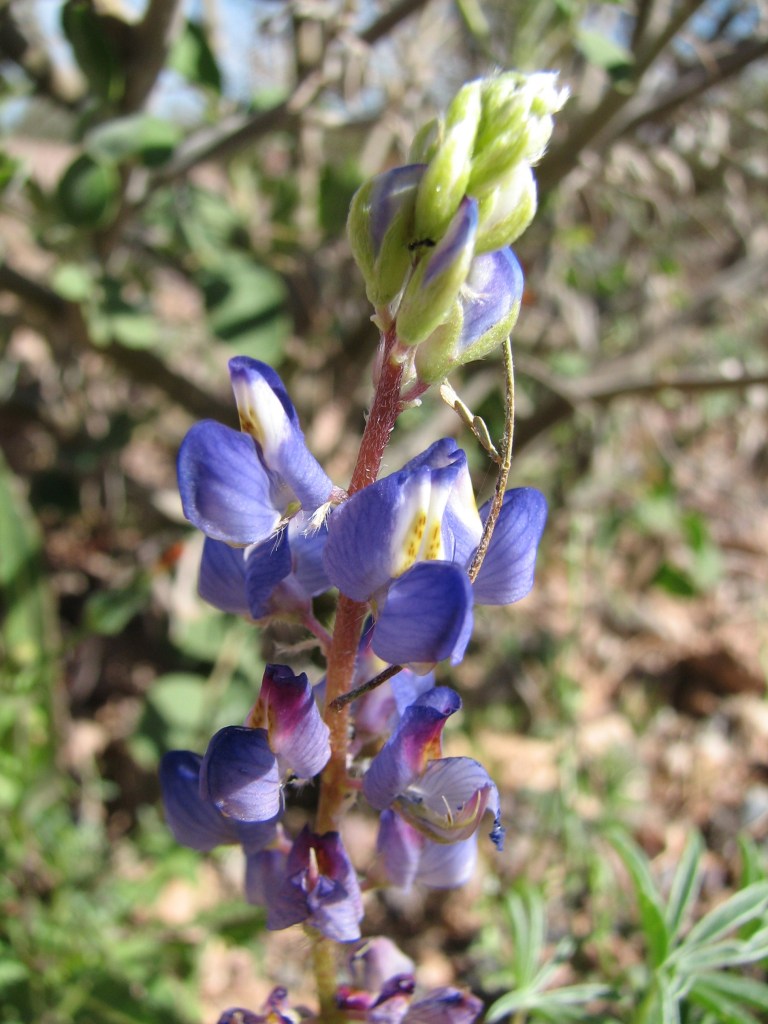
The bee pollination syndrome often includes flowers with lines of color or patterns called a “nectar guide” that essentially point to the nectar inside. The image here is a great example, from an arroyo lupine (Lupinus succulentus) I photographed in Organ Pipe Cactus National Monument, AZ. The nectar guides are yellow streaks with orange dots on a white background.
Another thing bees prefer is a place to land or hold onto, so expect large bees to prefer large flowers that can hold their weight. This makes sense if you think of balancing the energy gained from finding food (foraging) with the energy spent opening flowers. The tiny flowers of an ironweed, for example, would be squashed closed by the weight of a large-bodied bumble bee, making it difficult to access the nectar.
| Download and use of images from this site is a violation of copyright law and legal action will be pursued, unless permission has been granted by the author. All images are copyright Athena Rayne Anderson unless otherwise stated. |

 Athena Rayne Anderson
Leave a comment