
Download and use of images from this site is a violation of copyright law and legal action will be pursued, unless permission has been granted by the author.
This content is from a post originally published on May 15, 2011, on my blog “Pollinators Info” (no longer online).
These little flying dynamos are so much fun to watch. For some plants, they are the most important pollinators. Hummingbirds tend to prefer to drink nectar from tubular flowers, especially those red in color. In the process, pollen is often stuck to their heads or chins, then brushes off onto the stigmas of flowers they visit later. A hummingbird’s metabolism is so high that it cannot go without food for very long. Some hummingbirds in the mountains of South America have to “hibernate” during cold nights when they can’t find food to keep from starving to death!
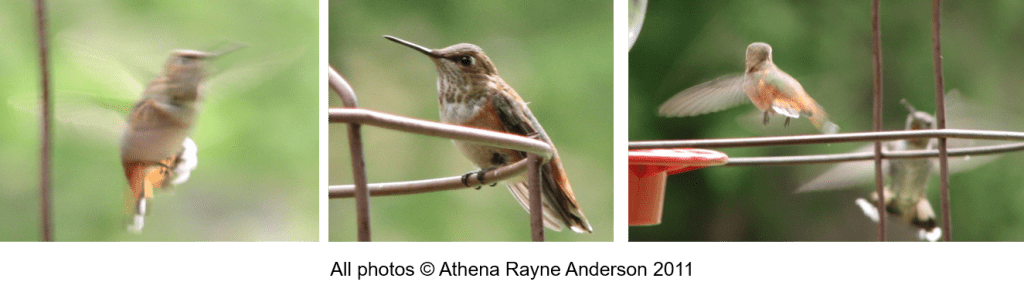
If you’ve ever put out a hummingbird feeder, you’ve probably seen their territorial displays and vigorous chases. Part of this behavior results from their need to feed frequently; when they find a good resource, keeping others from it is in their best interest. Territorial behavior is usually associated with males, but in the Rufous hummingbird (Selasphorus rufus), females are highly territorial. I made the series of photos above of a female Rufous defending a feeder in her territory in Arizona.
Featured photo copyright Matt Bango, CC0 1.0.
| Download and use of images from this site is a violation of copyright law and legal action will be pursued, unless permission has been granted by the author. All images are copyright Athena Rayne Anderson unless otherwise stated. |

 Athena Rayne Anderson
Leave a comment