Download and use of images from this site is a violation of copyright law and legal action will be pursued, unless permission has been granted by the author.
This post is based on one that was originally published on May 15, 2011, on my blog “Pollinators Info” (no longer online).
No animals required!
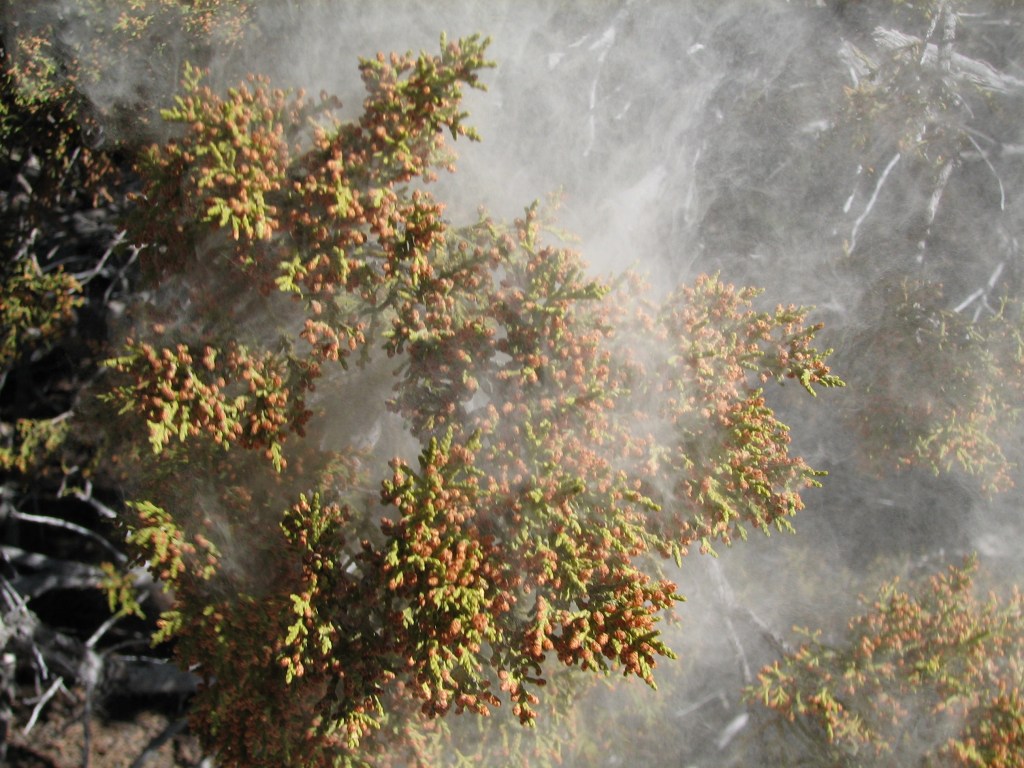
Wind pollination is another ancient type, demonstrated by the male juniper cones in the featured image (the white cloud is pollen).
Plants pollinated by wind typically have no flowers, or they’re very small, and the pollen is shaped in such a way as to float in the air easily. In plants that are wind pollinated, male cones or flowers release trillions of pollen grains into the wind. The pollen then randomly drifts around and might bump into receptive female parts of the same plant species.
The primary adaptive value of this pollination type is that no animal pollinator is needed to transport pollen. Water is also unnecessary, so plants with this strategy can reproduce in drier conditions than those that use water pollination. Evolutionarily, the conifers (gymnosperms) were the first plants to move from moist to dry environments. Research suggests the evolution of wind pollination allowed for this habitat transition.
You’re probably familiar with two other groups of wind-pollinated trees, the oaks and pines, which can coat everything with their yellow pollen in spring in the southern United States.
| Download and use of images from this site is a violation of copyright law and legal action will be pursued, unless permission has been granted by the author. All images are copyright Athena Rayne Anderson unless otherwise stated. |

 Athena Rayne Anderson
Leave a comment