
Download and use of images from this site is a violation of copyright law and legal action will be pursued, unless permission has been granted by the author.
This post is part of an article I submitted for publication with a Georgia magazine called “Coastscapes” in 2010-2012. I’ve been unable to find this magazine online, but want to share the content for your educational enjoyment. The magazine was geared towards the general public, so there are no references to research articles. Feel free to contact me if you’d like help finding references for any of the content! All images that are not my own are used with permission.
You might not realize that beetles can be pollinators, but it’s true! Beetle pollination isn’t as common as pollination by bees or butterflies, but it is crucial to some plants. Beetles are very messy pollinators, because they eat, sleep, mate, and relieve themselves in the same flowers. This habit has earned them the title, “mess and soil pollinators.” Beetle pollination evolved even earlier than pollination by bees, in some of the world’s first flowering plants! Plants pollinated mostly by beetles have many anthers and stigmas, which makes it more likely that some of them will survive the beetles’ munching. One of the best examples of a beetle-pollinated plant is the magnolia, which is native to the Georgia coastal plain. The pollinator beetles shown here are some of the most conspicuous that you might see on your flowers.
Common Native Beetle Pollinators in the Georgia Coastal Plain
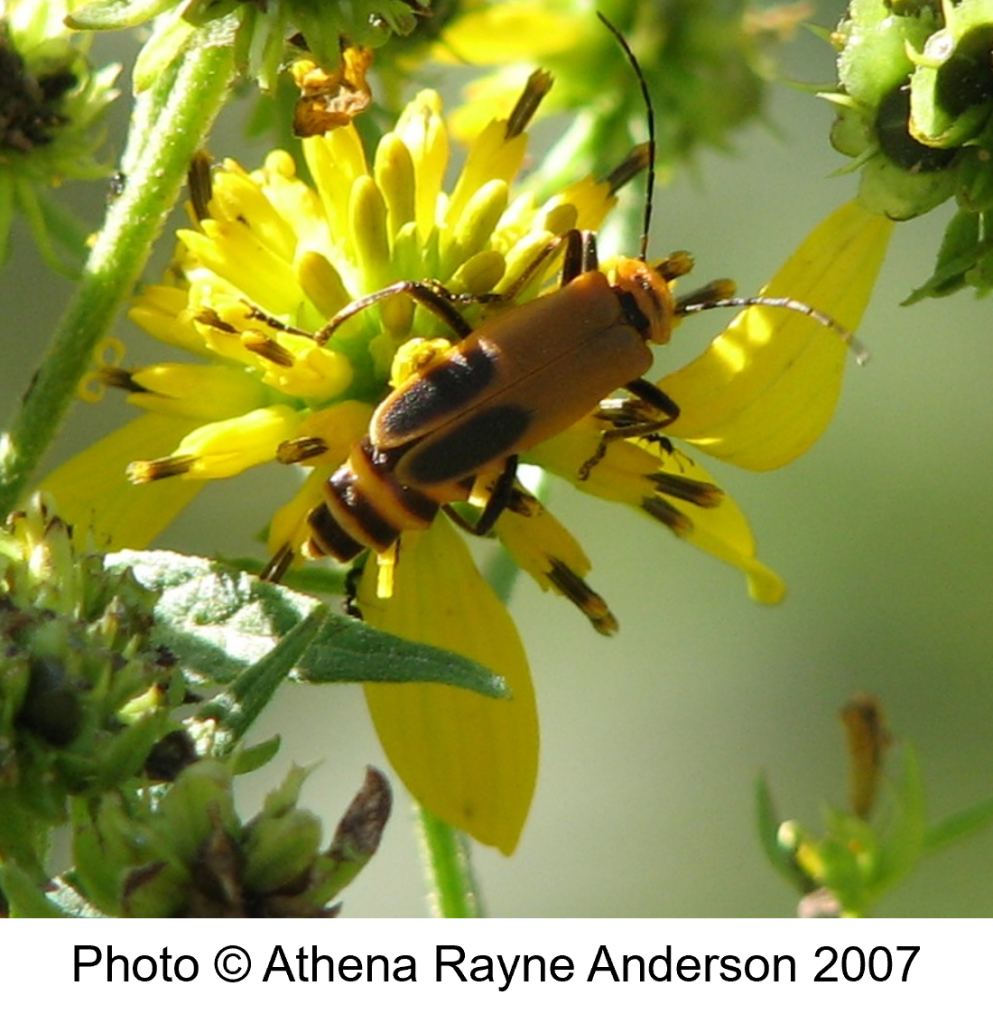
Soldier Beetles
Family Cantharidae
The species shown here is Chauliognathus pennsylvanicus, also known as the goldenrod soldier beetle. You’ll see lots of these on goldenrod in the late summer and fall. These beetles are about 1” long and carry pollen all over their bodies as they climb around, eating flower parts. Other species come in a range of colors but have the same general shape and size. Larvae of these beetles eat aphids and caterpillars.

Locust Borer
Megacyllene robiniae
This species is also most abundant on fall flowers, like the goldenrod shown here. It has very distinctive black-and-yellow coloration with red or red-brown legs. These beetles are around 1” long, or slightly longer, and their antennae are at least as long as their bodies. The common name of this species comes from the fact that the larvae live and tunnel around in black locust trees.
| Download and use of images from this site is a violation of copyright law and legal action will be pursued, unless permission has been granted by the author. All images are copyright Athena Rayne Anderson unless otherwise stated. |

 Athena Rayne Anderson
Leave a comment